
Last year, we reported on an electric Nissan Ariya that would make a trip from the magnetic North Pole to the South Pole manned by Chris Ramsey of Plug in Adventures and his wife Julie, who were also the first to complete the Mongol Rally in an EV in 2017. The vehicle will be the first of any kind – gas or electric – to manage this feat.
The couple is now well along the way through their trip, and we caught up with them in Southern California to see how things are going.
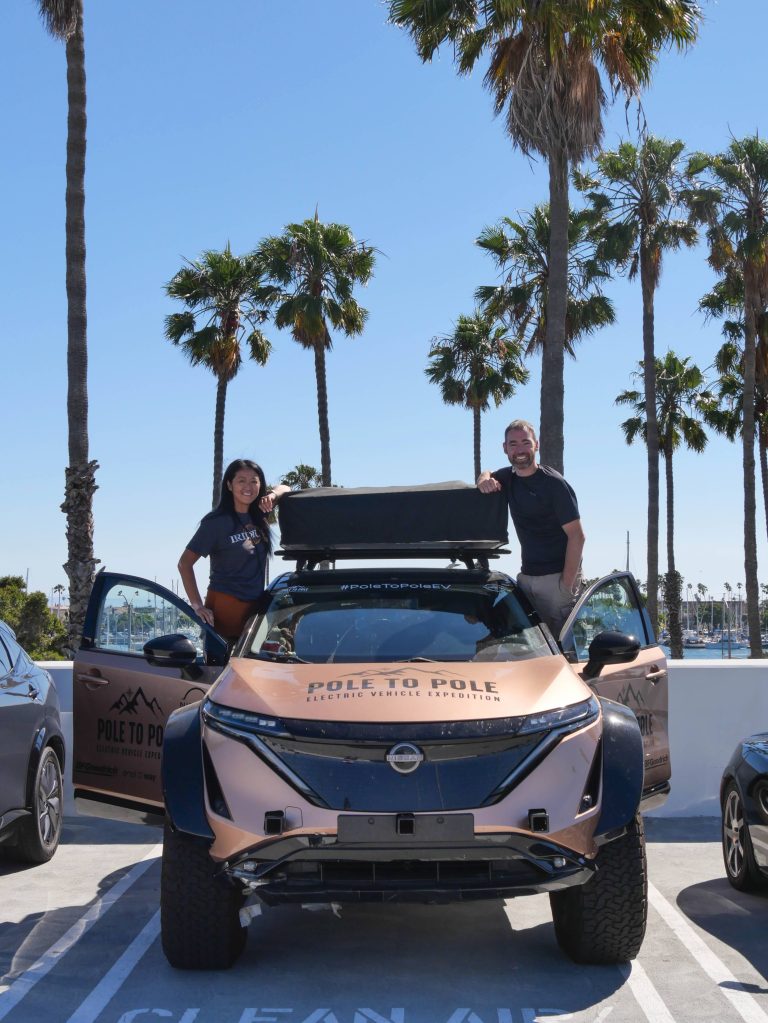
The star of the show: Ariya-turned-monster truck
The Ariya in question was modified by Arctic Trucks – an Icelandic company that specializes in preparing vehicles for the most difficult conditions on Earth – and has been dubbed model “AT39.” The Pole to Pole Ariya is the first electric vehicle the company has ever modified and is being used as a proof-of-concept for future modifications of polar electric vehicles, potentially to replace the diesel vehicles currently used for Antarctic research and expeditions.
But the AT39 Ariya actually isn’t that far off from stock. It’s still using Nissan’s suspension (just lifted) and powertrain, but several tow hitches and other gear solutions have been added, along with some reinforcement to the frame and underbody. On a gas vehicle, a gearbox change would have been necessary for such heavy off-roading, but that isn’t needed with an EV due to the broad torque curve of electric motors.
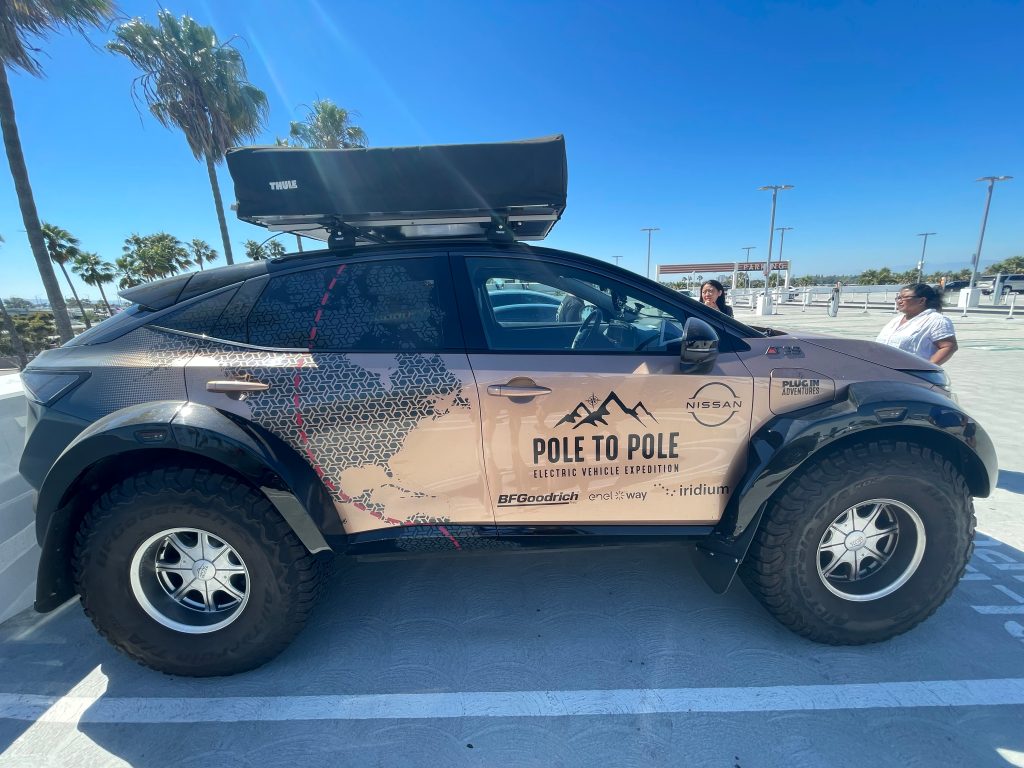
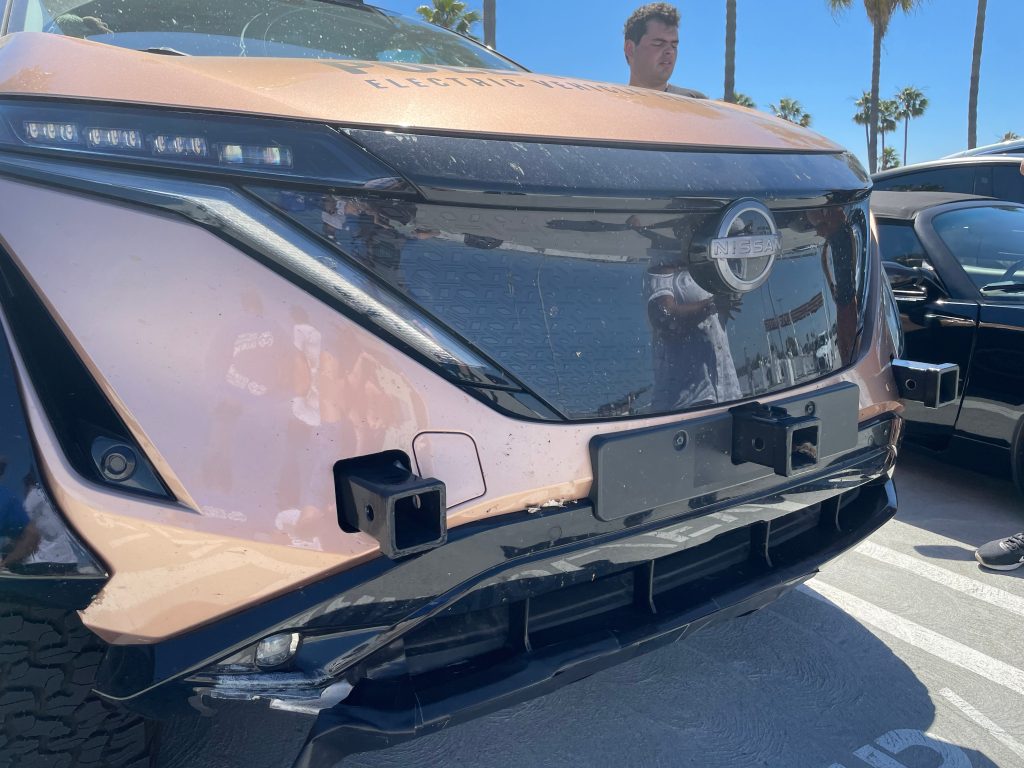
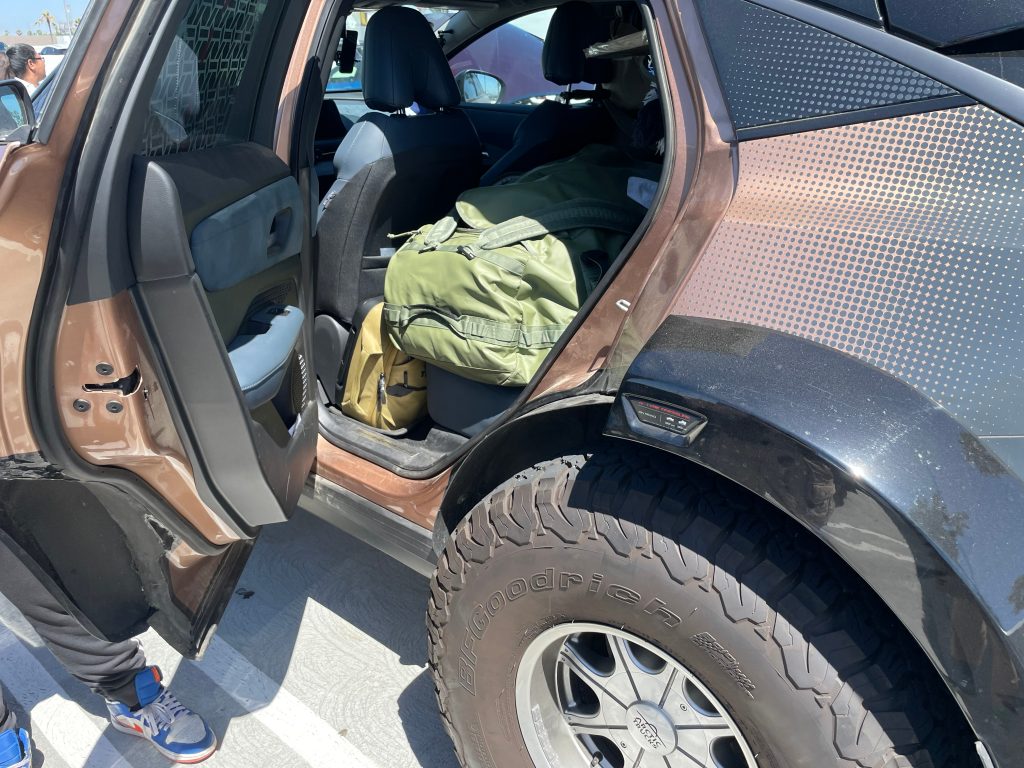
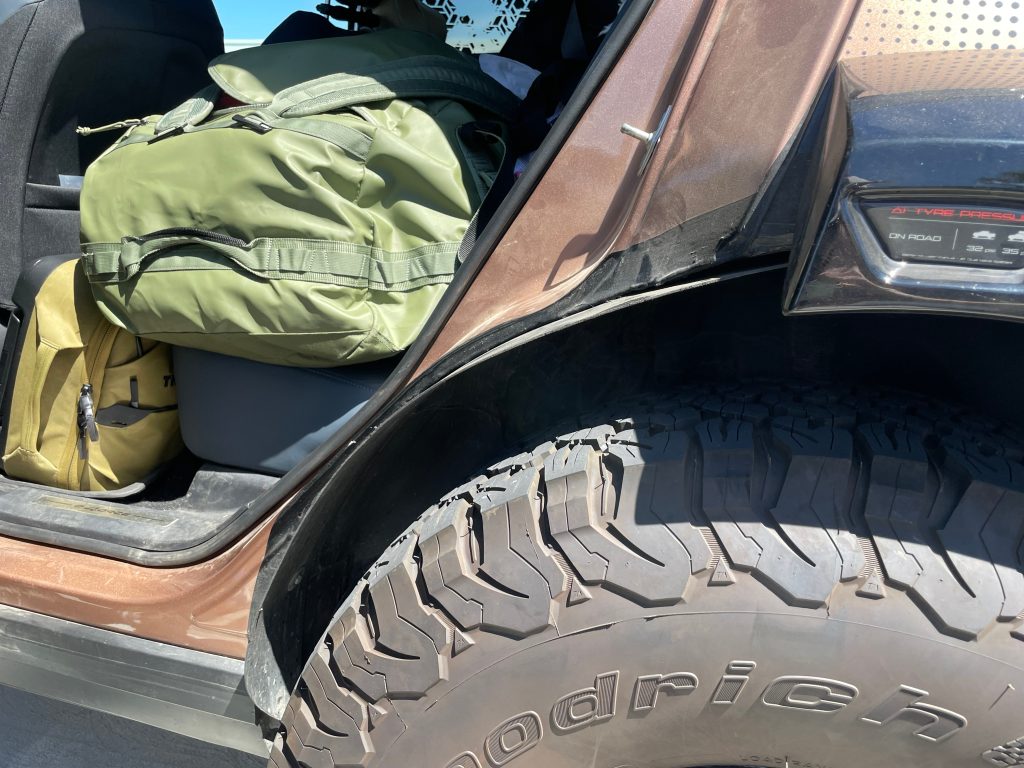
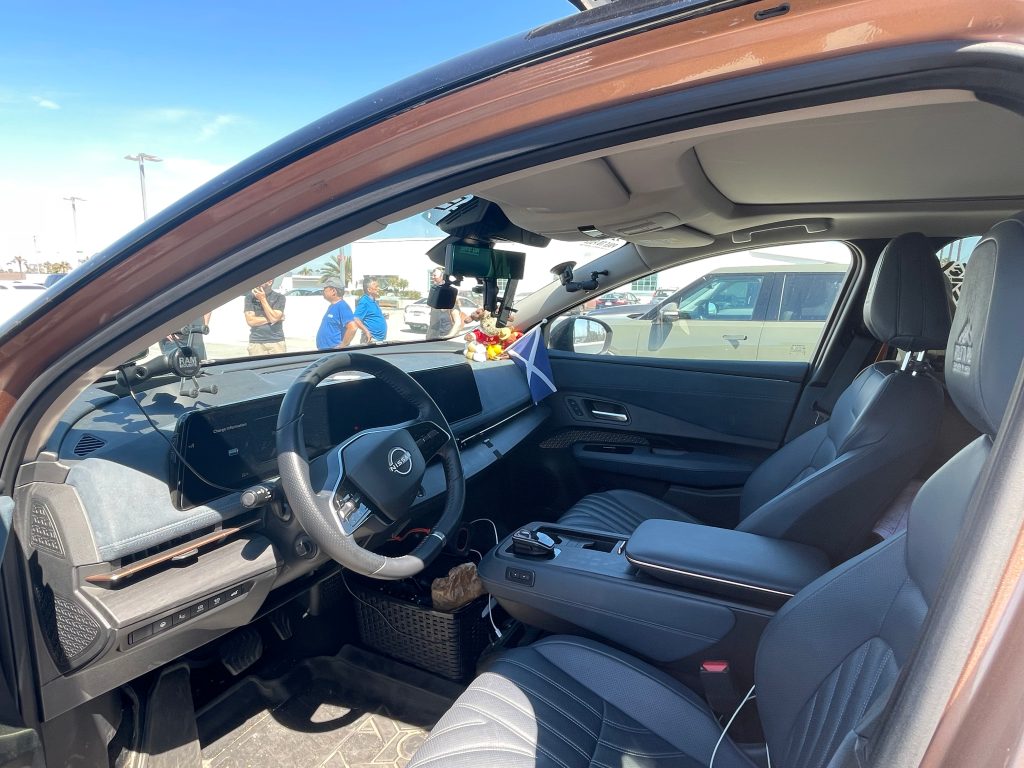
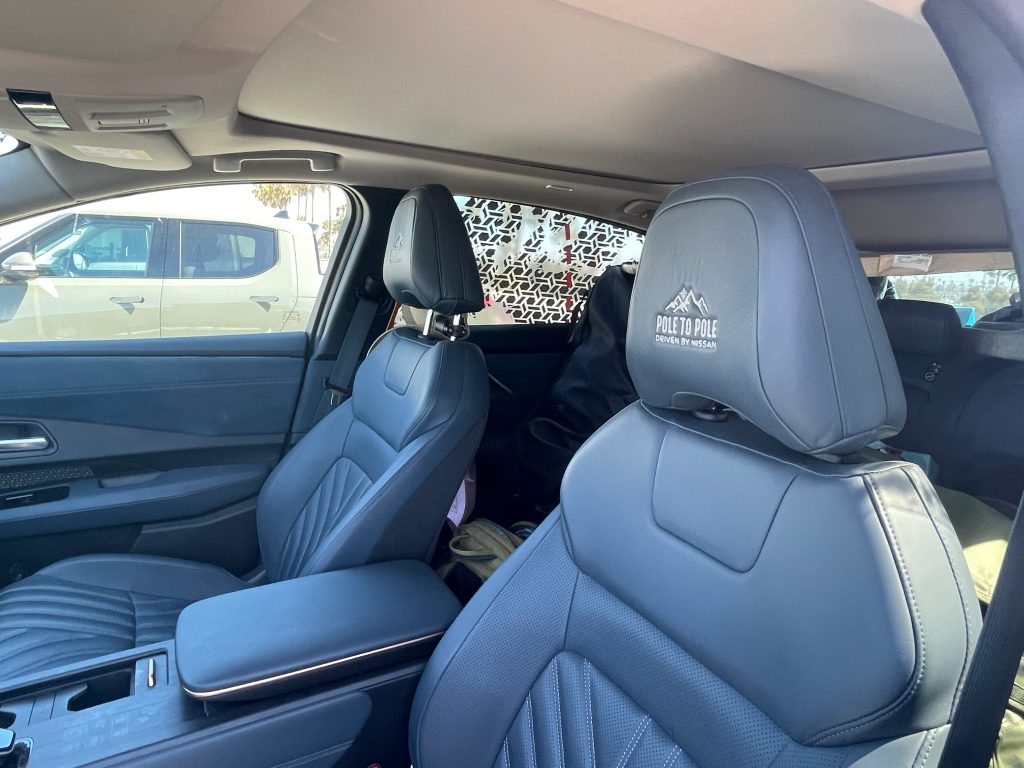
The most striking change is the addition of huge 39-inch BFGoodrich KO2 tires, which required widening the wheel arches and adding large flared fenders – they only had to cut a little bit off the door to do it. On ice and snow, the duo has run the tires as low as four psi to help increase traction on rough or soft road surfaces.
Parked next to a standard Ariya, the AT39 certainly looks significantly more imposing:
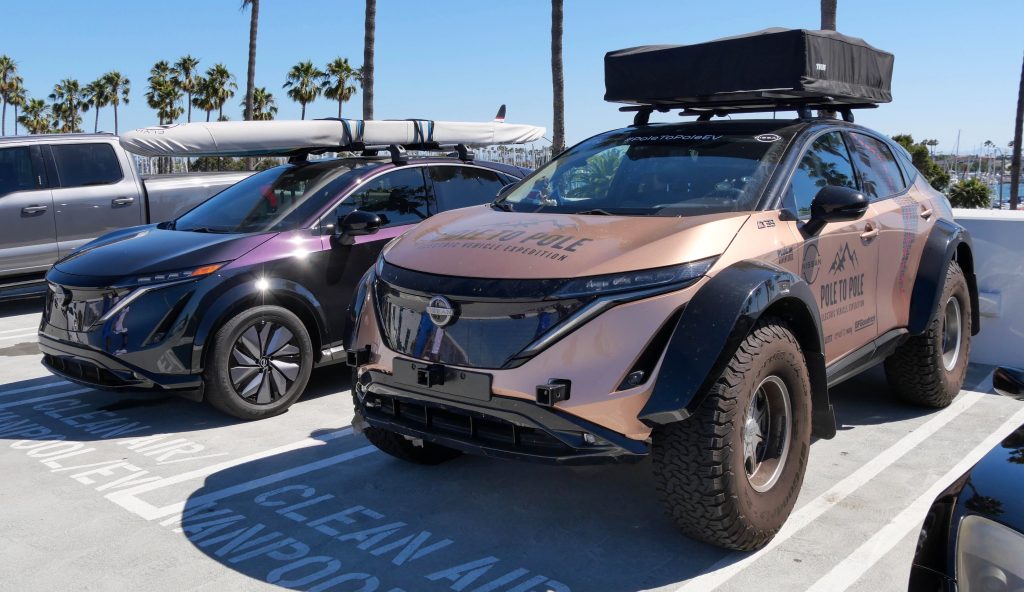
Between the huge off-road tires, fenders, and roof rack with rooftop tent, the range has been cut significantly. But the Ramseys haven’t been able to test exactly how much range they’ve lost because the tire modifications mean their speedometer and odometer aren’t calibrated properly. According to GPS, the longest they’ve gone so far between charges is about 162 miles, with 18% left in the battery, giving them a “best” achieved range of ~200 miles out of the 272-mile rated Ariya.
These range losses are part of the message that the Ramseys want to send, anyway. If they can make it all the way from one end of the globe to the other with a 150-200 mile range, this shows that most people don’t “need” the huge range they claim they need.
Challenges behind & ahead
But when they get to the South Pole, things will be different. The rooftop tent will be swapped out for a larger deployable structure that can encompass the whole car, to trap some of the heat from the 24-hour summer polar sun to keep both the Ramseys and the car warm.
Driving over snow and ice in potentially -40º temperatures is going to eat into efficiency, and Chris estimates that the car will use about 1% of battery for every kilometer of travel. So, for the approximately 850 miles (~1,400 km) that they’ll be driving from the edge to the center of Antarctica, this means a lot of charging and then a lot of charging on the way back, too.
Some of this charging will be provided by solar panels, which the Ramseys plan to mount vertically rather than horizontally. At extreme latitudes, the sun is low in the sky, so vertical panels capture sunlight more directly and can benefit from light being reflected off snow and ice.
And when they can’t get enough solar, they’ll have a gasoline generator. This sounds like a surrender, but it actually brings up one of the strengths of EVs – EVs are energy-agnostic and can be fueled with solar, wind, tidal, a hamster on a wheel… or even oil. Whereas gas cars, well, they can only use oil and nothing else.
Previously, the two had planned to charge during stops by using a small wind turbine that they were carrying with them on a trailer. But the trailer ended up being more trouble than it was worth on rough Arctic roads, so that plan was abandoned. The solar plan will be less unwieldy to transport, but it remains to be seen how difficult deployment and teardown will be in frigid polar temperatures.
People have called them “crazy” for doing this expedition, but Chris thinks that he’s the right one for the job. He said he considered an around-the-world trip, but that’s been done before. As a “Plug in Adventurer,” Chris likes to push the boundaries of what EVs can do, and has experience both driving EVs in rough conditions and advocating for them to the public.
Chris said that, outside of the polar regions, finding a charge has not been a problem, even in the most remote areas. This has held true for this expedition and the Ramseys’ previous one, driving an original 30 kWh Nissan Leaf from London to Mongolia in the Mongol Rally in 2017 – again, a low-range vehicle that still managed a long trip. Electricity is everywhere, and electrical outlets are far more common than gas stations, after all.
Climate change in focus
The 17,000-mile trip will take a total of nine months, a timeline constrained primarily by weather conditions at the poles. By starting in the North Pole’s spring, the pair had sunlight available but plenty of sea ice (which is, unfortunately, retreating due to climate change). And finishing in the South Pole’s summer means they’ll have 24-hour sunlight to power the aforementioned solar panels – plus, Antarctic expeditions aren’t permitted before November anyway.
Or at least, that’s how the plan was supposed to go. The journey got off to a rocky start, as they had to rush to make it to the North Pole and back before the ice roads melted. This meant they basically did nothing but drive (oft through barely-passable slush) and charge between March 29 and April 8, getting out with just a day to spare before the ice road closed abruptly due to melting, almost two weeks earlier than it closed last year.
In previous years, the roads stayed open much longer – but due to climate change, they’ve been getting dangerous and undrivable earlier and earlier.
And this is what the trip is all about. The global shift to electric vehicles is necessary in the fight against climate change, to which auto emissions are a primary contributor. Julie wants to use the trip to see electrification efforts and highlight efforts to fight climate change from local communities along the way.
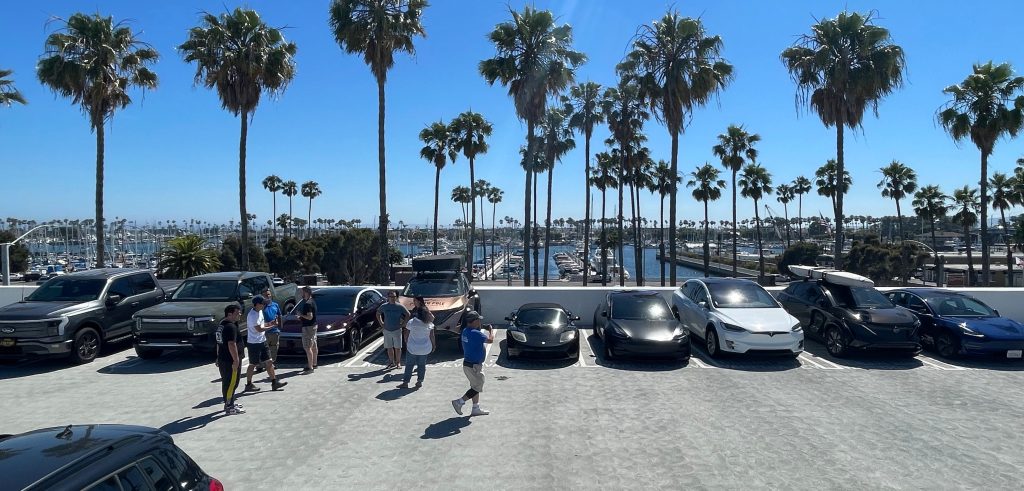
To that end, the pair have already toured a copper mine to see its electrification efforts, checked out an electric seaplane in the Pacific Northwest, stopped by the Formula E electric car race in Portland, and spoken at the Northwest Overland Rally to show a bunch of diesel RV owners that electric cars can handle the toughest travel conditions. And they hung out with the Tesla Owners Club of Orange County (where we met up with them), serendipitously showing off the wide range of EVs available today:
Going forward, they’re looking forward to visiting (and charging from) solar and wind farms run by trip sponsor Enel X, and hoping to participate in reforestation projects in South America.
But the most interesting part so far for Chris has just been meeting people. Both those who are familiar with EVs, like the Tesla club, and who are new to them, like the overlanders, some of whom told him that he’d sold them on EVs with his story.
If you want to follow Chris & Julie’s journey, check out their website or Linktree to find your preferred social media link. You can even track them live with this cool interactive map, showing locations of interest they’ve stopped at so far.
"electric" - Google News
July 23, 2023 at 09:00PM
https://ift.tt/64y1Dhx
This 'crazy' couple is driving an electric car all the way to the South Pole - Electrek
"electric" - Google News
https://ift.tt/z5kdHjT
https://ift.tt/U0P1yRV

:format(jpeg)/cloudfront-us-east-1.images.arcpublishing.com/tgam/OUP4EFGPTJCUBPZCVTFRAAK4KQ.JPG)

