Rechercher dans ce blog

Tuesday, March 7, 2023

State-owned electricity generation firm ‘could save Britons nearly £21bn a year’ - The Guardian

mivo.indah.link

A publicly owned electricity generation firm could save Britons nearly £21bn a year, according to new analysis that bolsters Labour’s case to launch a national energy company if the party gains power.

Thinktank Common Wealth has calculated that the cost of generating electricity to power homes and businesses could be reduced by £20.8bn or £252 per household a year under state ownership, according to a report seen by the Guardian.

The Labour leader, Keir Starmer, has committed to creating “a publicly owned national champion in clean energy” named Great British Energy.

Starmer is yet to lay out the exact structure of the mooted company, although he has said it would not involve nationalising existing assets, or become involved in the transmission or retail supply of energy.

Starmer instead hopes to create a state-backed entity that would invest in clean energy – wind, solar, tidal, nuclear and other emerging technologies – creating jobs and ensuring windfalls from the growth in low carbon power feed back to the government.

The Common Wealth report, which analysed scenarios for reforming the electricity market, said that a huge saving on electricity costs could be made by buying out assets such as wind, solar and biomass generators on older contracts and running them on a non-profit basis. Funding the measure could require a government bond issuance, or some form of compulsory purchase process.

Last year the government attempted to get companies operating low carbon generators, including nuclear power plants, on older contracts to switch to contracts for difference (CfD), allowing any outsized profits to flow back to taxpayers. However, the government later decided to tax eligible firms through the electricity generator levy instead.

The Common Wealth study concluded that a publicly owned low carbon energy generator would best deliver on Britain’s climate and economic goals, would eliminate windfall profits made by generators and would cut household bills.

MPs and campaigners have argued that Britain’s energy companies should be nationalised since the energy crisis, which has resulted in North Sea oil and gas producers and electricity generators making windfall profits, and a string of retail suppliers collapsing, costing taxpayers billions. Detractors of nationalisation in energy argue it can stifle innovation and expose taxpayers to huge financial risks.

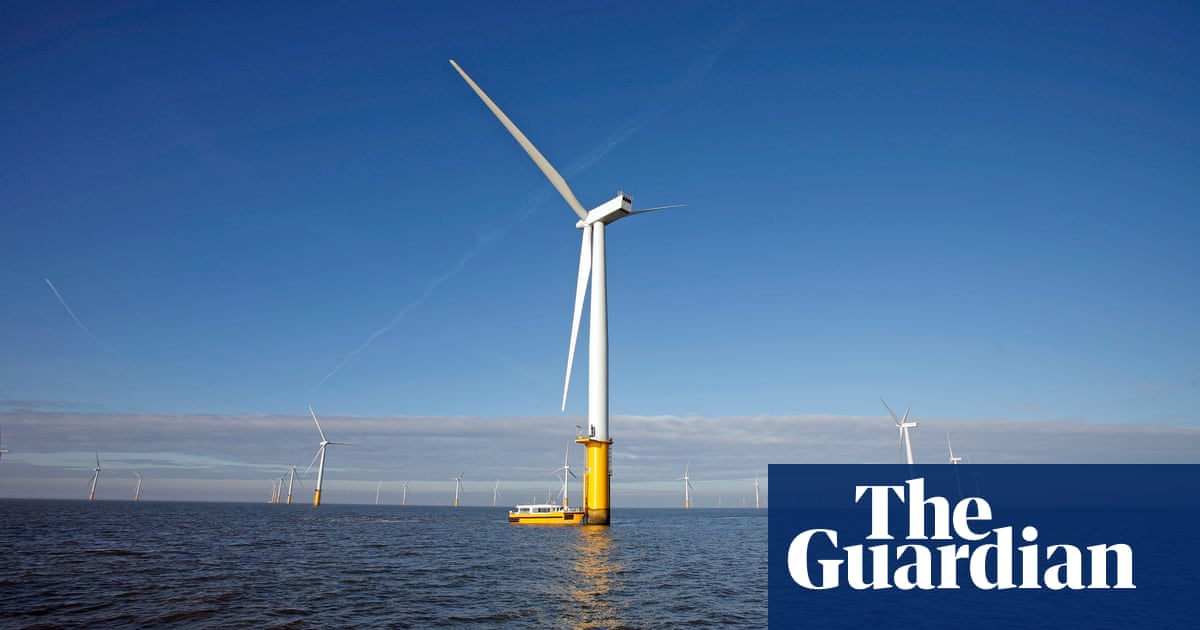
Common Wealth pointed out that more than 40% of the UK’s offshore wind generation capacity was publicly owned by overseas national entities, meaning the benefits of high electricity prices linked to the war in Ukraine had flowed back to other governments.

The study found the publicly owned generator model would create more savings than other options, including a drive for voluntary CfDs; splitting the generation market between low carbon and fossil fuel sources and a “single buyer model” with nationalised retail suppliers.

skip past newsletter promotion

The Common Wealth director, Mathew Lawrence, said: “The energy system faces two acute challenges: the staggering profits being made by generators, and the need to rapidly decarbonise generation.

“A publicly owned generator can address both these pressing issues, rebuilding out energy system around the public interest. That is the fastest, fairest, most effective way to build a clean, secure, affordable power system.”

Starmer has cited the success of European energy firms with state backing including Sweden’s Vattenfall and Ørsted, which is part owned by the Danish state.

The authors of the Common Wealth report argued that Great British Energy could be a “powerful tool” in decarbonising Britain, but said ambition akin to the creation of the NHS was needed to make a serious difference.

“An approach to reform that does not go to the root of the upstream problems in our energy system, that does not build out at scale and instead remains a marginal actor in the transition, will be unable to deliver on its potential or, in the case of Great British Energy, its stated goals. In this context, timidity and incrementalism are the greatest risks, and ambition the safest path forward,” they wrote.

Adblock test (Why?)


"electric" - Google News
March 07, 2023 at 02:03PM
https://ift.tt/INp3ce7

State-owned electricity generation firm ‘could save Britons nearly £21bn a year’ - The Guardian
"electric" - Google News
https://ift.tt/P6DpTev
https://ift.tt/zW2U3K1

This Electric Vehicle Owner Loves His Car - The New York Times

mivo.indah.link

John Silbey bought a used Bolt without a test drive and said it saves him money and is fun to drive.

Good morning. Electric vehicles are no longer a niche choice for well-off environmentalists. We’ll meet a driver who says he’s a “cheap early adopter” — and bought a used E.V.

A man in a plaid shirt sits in the driver’s seat of a stationary car with the door open.
James Estrin/The New York Times

I was no more than 75 words into reading Robin Shulman Agüeros’s story about people who are buying electric vehicles in the New York area when a line from an E.V. owner named John Sibley intrigued me: “I’m the cheap early adopter.” That raised practical questions about owning an E.V. How much are you spending on electricity, compared with gasoline when you had a conventional car? Is the driving different in an E.V.? What about the fear of draining the battery without finding a charging station?

He was also the first person I had encountered who had bought a used E.V. I’ve talked to E.V. owners at charging stations in parking lots. I actually did that when I was on vacation last year, but all of them were charging pricey cars, like an Audi e-tron, which starts at $70,800. That would buy three used Chevrolet Bolts at the price Sibley had paid. Analysts say the average electric vehicle costs about $60,000, which is about $11,000 more than the average price of a new vehicle in December 2022.

Tesla, which tends to dominate the conversation about E.V.s, is working on more affordable vehicles and is planning to build a factory in Mexico to manufacture them. But Sibley, who said he had done a lot of research about E.V.s, told me he had never driven a Tesla. On the other hand, he bought the E.V. he is now driving happily without so much as an around-the-block test drive.

Here’s what Sibley, a sound engineer who works on Broadway shows and commutes from Goshen, N.Y., told me. I started the conversation by asking him to talk about what he used to drive and how he found his E.V.

I was driving a Toyota Prius, which was a great car, but it was approaching the end of its life. It had over 200,000 miles on it. It was my commuter. Even though it was great on gas — I regularly got 42 miles plus to the gallon, and my daily commute is 130 miles — I was still filling up three times a week and spending $100 a week on gas, at least.

I had been fascinated by electric cars and had identified the Bolt as a model I could probably find inexpensively because General Motors had a giant recall on them. They had to replace the battery in every Bolt made between 2017 and 2022. I’d been calling dealers on and off for a while. The line for a long time was “we have a Bolt, but we can’t sell it to you because the battery hasn’t been replaced.”

Eventually, in February of last year, what came up was a 2017 with 17,000 miles, just off a lease, for $21,000. I called the dealer expecting the same answer. They said, “We just replaced the battery — it’s brand-new.” I bought the car over the phone. I had never driven one, never sat in one, until I picked it up. I felt pretty sure that if I hated it, I could get my money back if I didn’t like it. But I loved it.

It was in Maryland. My first trip home in my first-ever electric car involved navigating public charging stations. It was intimidating at the time but easier than I thought it would be. There are apps — the biggest one is PlugShare — listing every publicly available charger. I made a map, planning my mileage very conservatively to make sure I didn’t run out.

I only had to stop once. It took about 45 minutes. I stopped and ate at a Chinese restaurant in the strip mall in Pennsylvania where the charger was. There was a row of chargers behind the drugstore. I made it home just fine.

I spent a little time trying to figure out my home charging setup and what I needed for that. What you want is called Level 2 charging. That meant calling an electrician to have a plug installed. The plug I have is commonly used for RV connections. It’s very similar to a dryer plug. I had done the research in advance so I knew my electrical panel could handle it, and I got lucky: I got away for $300 for the electrician and $350 for the Level 2 charger, the piece that connects to the car.

My electric bill has certainly gone up, but I discovered that in New York, where electric companies give a discount to incentivize charging at nonpeak times, I’m eligible for time-of-use billing, so my rate drops tremendously at night, which is when I charge my car.

Having a car to charge ended up adding about $100 to my electric bill every month, and that’s driving 130 miles a day, five to six days a week. I’m saving significant money, and it’s tremendous fun to drive.

The Bolt is not considered particularly quick for an electric car, but it is the quickest car I have ever owned. It does zero-to-60 somewhere in the neighborhood of 5.5 seconds, where it would take my Prius about 12 to do that. I wasn’t looking for driving excitement, I was looking for practicality, but it’s responsive, it’s quick and it handles very well. You can point it and accelerate into any little gap that opens up in traffic on the road.

I take friends for rides in it a lot. The people I let drive it, I don’t have to go into a spiel about what you have to do, you just put it in drive and go. It feels like any other car.


Weather

Expect a cloudy day, turning into a mostly sunny day, near the mid-40s. The evening is partly cloudy with temps dropping to the high 20s.

ALTERNATE-SIDE PARKING

Suspended today (Purim).


Anna Moneymaker for The New York Times

METROPOLITAN diary

Dear Diary:

My boyfriend had planned a staycation weekend in Flushing for my birthday. We invited all of our friends to join us for an epic overnight of feasting.

We started at the New World Mall food court with mala dry pot and crispy pork dumplings. I filled up quickly but managed to free up space during a walk to the Ganesh temple for the famous dosas and uttapams.

Next up: drinks at a local watering hole with a sizable outdoor space. I nursed a single beer and switched to water, prepping myself for our Korean barbecue dinner.

It didn’t disappoint, and we were treated to endless banchan alongside Mapo’s signature galbi (and, of course, plenty of soju.)

Karaoke was next, naturally. We sang along to Nicki Minaj, Abba, Billy Joel for hours.

“This is crazy” my boyfriend began, “but I could eat … ”

Twenty minutes later we were at Hahm Ji Bach tucking into kimchi and pork belly. I couldn’t believe I was still eating.

The next morning, we pushed onward, sitting for dim sum at Asian Jewels. Other friends joined us, reviving our energy and appetites. Plates of shu mai and turnip cakes appeared and then disappeared in a blur.

We waddled outside. Next up was hot pot.

I turned to my boyfriend.

“This has been great,” I said, “but … ”

“Should we call it?” he said.

I nodded.

We took the subway home. Dinner was salad.

— Rachel Leventhal

Illustrated by Agnes Lee. Send submissions here and read more Metropolitan Diary here.


Glad we could get together here. See you tomorrow. — J.B.

P.S. Here’s today’s Mini Crossword and Spelling Bee. You can find all our puzzles here.

Melissa Guerrero and Ed Shanahan contributed to New York Today. You can reach the team at nytoday@nytimes.com.

Sign up here to get this newsletter in your inbox.

Adblock test (Why?)


"electric" - Google News
March 07, 2023 at 12:01PM
https://ift.tt/tIKHDEN

This Electric Vehicle Owner Loves His Car - The New York Times
"electric" - Google News
https://ift.tt/P6DpTev
https://ift.tt/zW2U3K1

Featured Post

Quarterly sales of electric cars break records in several key markets amid energy crisis - IEA – International Energy Agency

mivo.indah.link [unable to retrieve full-text content] Quarterly sales of electric cars break records in several key markets amid energy cr...

Popular Posts